


 English
 Español
 Deutsch


Two copper lugs stamped from the same alloy can compress very differently under a crimping tool if one was annealed to a different hardness specification than the other. A Single Hole Copper Lug (A Class) depends on that annealing step as much as it depends on copper purity, and buyers who only compare material grade on a spec sheet often miss the process detail that actually determines connection reliability in the field.
Full Annealing Sets the Compression Behavior
A Single Hole Copper Lug (A Class) manufactured to full anneal at HV60 hardness compresses predictably under a crimping tool, forming a tight, consistent connection around the conductor rather than resisting deformation or cracking under crimp pressure. Buyers should request the specific hardness value a supplier targets during annealing for a Single Hole Copper Lug (A Class) run, since a lug annealed to a harder specification requires more crimping force to achieve full compression and can behave inconsistently if installers are using tooling calibrated for a softer standard. This detail matters more for buyers supplying electricians and installers who may not have visibility into the annealing specification behind the product they're using.
Fixed Close-End Structure Improves Connection Reliability
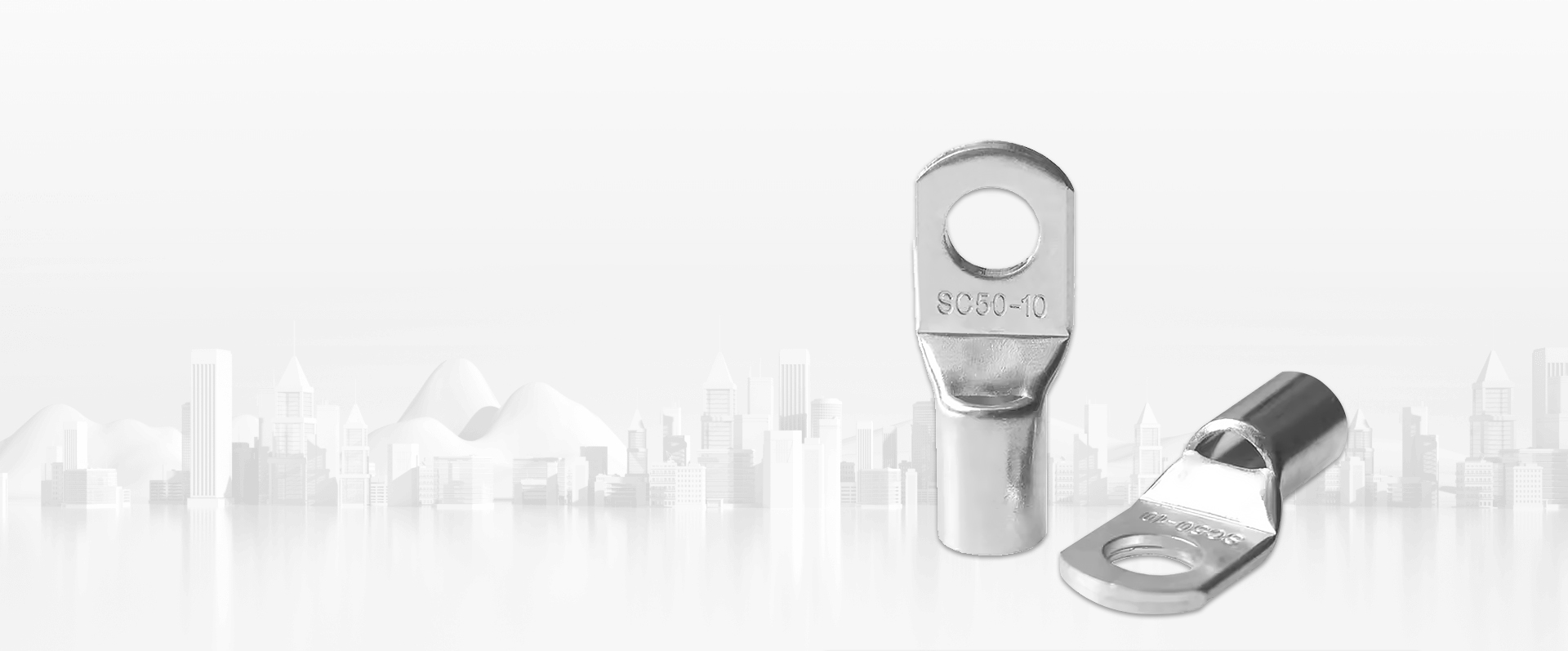
The stub design built into a tin-plated copper lug creates a fixed close-end structure that holds the conductor in place during crimping, reducing the chance of conductor slippage that a simple open-barrel design can experience under pressure. This structural detail matters directly for buyers supplying high-vibration environments like automotive or industrial machinery applications, where a connection that shifts slightly during installation can develop resistance issues over time even if the initial crimp appeared secure.
Surface Treatment Affects Long-Term Conductivity
Tin plating on a Single Hole Copper Lug (A Class) protects the underlying copper from oxidation, which matters because oxidized copper develops increased contact resistance at the connection point even when the mechanical crimp itself remains sound. Buyers sourcing for outdoor or humid-environment applications should confirm plating thickness and consistency, since a thin or uneven tin layer can wear through faster in harsh conditions, exposing bare copper to the oxidation the plating was meant to prevent.
Comparing Lug Sizes by Cable Capacity
|
Item Series |
Cable Size Range (mm²) |
Typical Application |
|
SC 6 to SC 25 |
6–25 |
Light industrial and control wiring |
|
SC 35 to SC 95 |
35–95 |
Standard power distribution |
|
SC 120 to SC 300 |
120–300 |
Heavy industrial and commercial feeders |
|
SC 400 to SC 630 |
400–630 |
High-capacity power transmission |
Buyers should match the exact item number of a Single Hole Copper Lug (A Class) to both cable size and stud diameter requirements rather than assuming a single lug size accommodates a range of screw specifications, since the dimensional tables for this product show meaningful variation in stud hole diameter even within the same cable size rating.
Quality Control Across a Wide Dimensional Range
Manufacturing a non-insulated cable lug line spanning from small control-wiring sizes up through high-capacity transmission sizes requires dimensional consistency checks at each size point, since tooling wear affects different cavity sizes at different rates during a production run. Buyers placing orders spanning multiple sizes within the same shipment should request dimensional tolerance documentation across the specific sizes in their order, rather than assuming consistency demonstrated at one size point extends uniformly across the full product range.
Customization and OEM Supply for Industrial Buyers
Buyers building a private-label electrical connector line should confirm whether an A class copper terminal program allows custom stud hole sizing or packaging configuration without requiring new tooling, since this affects both cost and lead time for a bulk order. An OEM copper lug manufacturer running dedicated production across the full size range can typically accommodate mixed-size container orders, letting distributors stock a complete size range without committing full container volume to a narrow slice of the catalog. Buyers should request free samples of a Single Hole Copper Lug (A Class) before committing to a bulk order, since crimping behavior is easier to verify through hands-on testing than through a spec sheet comparison alone.
