


 English
 Español
 Deutsch


In one equipment repair workshop, a technician was asked to investigate an intermittent fault on a conveyor system.
The motor was running normally.
The control cabinet showed no alarms.
The cable insulation looked intact from end to end.
Yet the machine would occasionally stop for a few seconds before restarting again.
At first, attention focused on the motor and sensors. Several components were checked and replaced. The fault remained.
The actual cause turned out to be a wire joint hidden inside a terminal box.
The cable itself was still usable.
The connection was not.
Situations like this appear more frequently than many people expect. In electrical systems, failures are often associated with cables, switches, or electronic components. Yet a connection point only a few millimeters wide can sometimes determine whether an entire circuit remains stable.
This is where the role of a non insulated connector becomes easier to understand.
A Good Connection Is More Than Mechanical Pressure
Many people imagine electrical connections as a simple matter of joining two wires together.
In reality, the quality of contact between conductors affects resistance, temperature rise, and long-term reliability.
A poorly formed crimp may look acceptable from the outside. The wire stays in place and passes an initial inspection. Months later, vibration, thermal expansion, and repeated current flow begin affecting the connection.
The change is usually gradual.
Resistance increases slightly.
Heat increases slightly.
Neither change is large enough to attract immediate attention.
Eventually the connection begins creating problems that seem unrelated to the joint itself.
A non insulated connector is often used in situations where installers need direct metal-to-metal contact and where additional insulation will be applied separately after assembly.
Because the connection remains visible during installation, crimp quality becomes particularly important.
Vibration Usually Wins Small Battles
Factories are full of movement.
Conveyors start and stop.
Fans rotate continuously.
Pumps generate vibration throughout the day.
None of these movements appear dramatic.
Over thousands of operating hours, however, small forces accumulate.
Electrical technicians frequently discover that the location experiencing the greatest vibration is also where connection issues begin appearing first.
This does not necessarily indicate poor materials.
Sometimes the original connection was installed correctly but faced operating conditions that gradually changed over time.
An equipment upgrade, increased production speed, or heavier loading can introduce vibration levels that did not exist when the wiring was first assembled.
Under these conditions, a non insulated connector may experience stresses very different from those anticipated during installation.
Heat Tells A Story Before Failure Appears
One detail experienced maintenance personnel often watch closely is temperature.
A connection problem rarely starts with a complete outage.
More commonly, it begins with a small increase in heat.
Thermal cameras used during inspections frequently reveal hot spots long before equipment stops working.
Interestingly, the surrounding cable may remain relatively cool while the connection itself becomes warmer.
This difference often points investigators toward the actual source of the issue.
In many cases, the affected component is not the wire but the joint connecting it.
For this reason, periodic inspections often focus on connection points rather than cables alone.
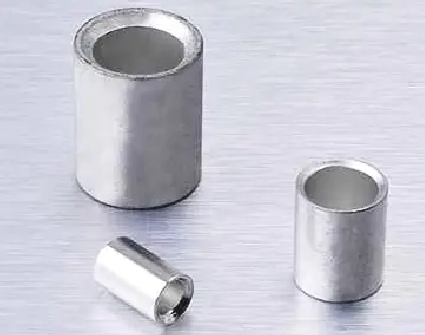
A properly installed non insulated connector can remain stable for years, but like any electrical component, its performance depends heavily on installation quality and operating conditions.
The Smallest Components Often Receive The Least Attention
Large motors attract attention.
Control panels attract attention.
New automation systems attract attention.
Small electrical joints rarely do.
Yet maintenance records across many industries tell a familiar story. Unexpected downtime is not always caused by expensive equipment. Sometimes the source is a connection hidden inside a junction box that nobody has looked at for years.
That is why electricians often inspect crimped joints during troubleshooting, even when the problem initially appears somewhere else.
A non insulated connector occupies only a small part of an electrical system, but its influence can extend much further. When current, vibration, temperature changes, and operating hours combine over time, the quality of that connection can become one of the factors determining whether equipment continues running smoothly or begins developing faults that seem difficult to explain.
