


 English
 Español
 Deutsch


When electrical wiring fails in the field, the problem is rarely the cable itself. More often, it comes from the joint between two wires. This is where a crimp splice connector becomes important. It is a small component, but it decides whether a connection stays stable after vibration, heat, or long-term load.
In many repair cases, technicians do not replace entire wiring systems. They cut out a damaged section and rebuild the joint using a crimp splice connector. The expectation is simple: once crimped, the connection should behave like a continuous conductor.
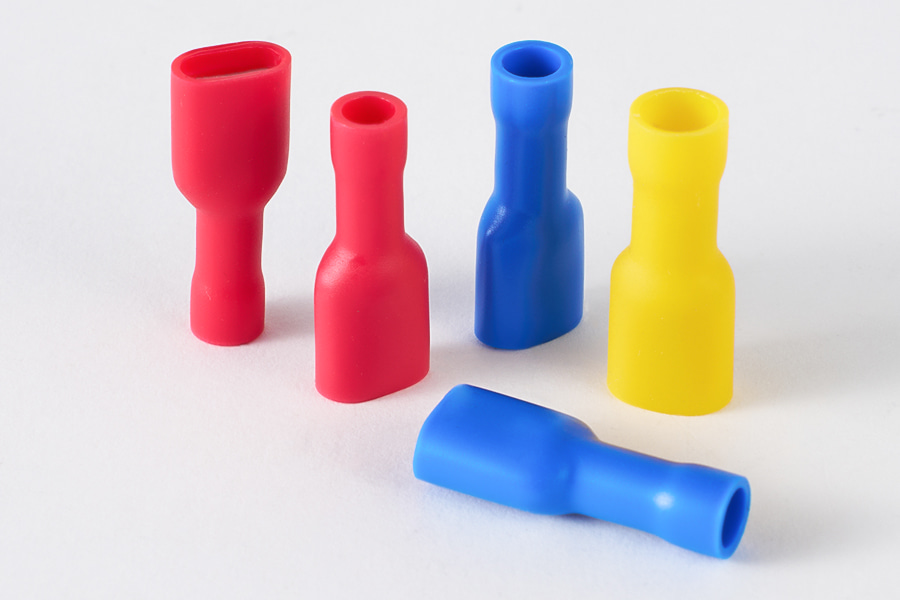
Contact Between Metal and Wire
Inside every crimp splice connector, the real work happens at the contact interface. The connector barrel presses against the copper strands, forming a mechanical bond that also carries electrical current.
If the compression is uneven, current flow may concentrate in a small area. Over time, that can create resistance changes or localized heating. In workshop observations, connectors that looked identical on the outside sometimes performed very differently once opened and examined internally. The quality of contact inside a crimp splice connector is not visible, but it defines performance.
Crimp Force Is Not Guesswork
A common misunderstanding is that crimping is simply “pressing hard.” In practice, pressure needs to be controlled.
Too little force leaves gaps between strands and connector walls. Too much force can cut into the wire or deform the barrel. Experienced technicians rely on calibrated crimp tools rather than manual force alone.
In one field repair scenario involving vibration-prone equipment, inconsistent crimping was identified as the reason for intermittent failure. After switching to a properly calibrated tool, the same crimp splice connector design performed without issues. This kind of adjustment is often more important than changing the connector type itself.
Insulation and Environmental Exposure
Many connectors are designed with insulation sleeves. These are not only for safety but also for stability in real environments.
Dust, humidity, and oil exposure can slowly affect exposed metal areas. In automotive wiring systems, for example, connectors are often placed in zones with constant vibration and temperature variation. A sealed crimp splice connector reduces the chance of contamination entering the joint area.
Some installations add heat-shrink tubing over the connector. This extra layer is not always required, but it is commonly used when wiring is exposed to outdoor or industrial conditions.
Why Small Differences Matter in Production
From the outside, most crimp splice connectors look almost identical. The differences are often hidden in wall thickness, barrel geometry, and plating quality.
A slight variation in copper thickness can change how the connector reacts under pressure. In high-volume applications, these small differences become more noticeable after long service periods rather than immediately after installation.
This is why production control is often focused on repeatability. A stable batch behaves predictably, while inconsistent batches create unpredictable electrical behavior later in the field.
Where They Are Commonly Used
The use of crimp splice connector solutions is not limited to one sector. They appear in automotive wiring harnesses, industrial control panels, household appliances, and machinery systems.
In automotive applications, vibration resistance is often the main concern. In industrial environments, temperature and load stability become more important. Although the same connector type may be used, expectations change depending on the environment.
Technicians often choose a crimp splice connector because it allows quick repair without soldering. This reduces downtime, especially in systems where rewiring an entire harness would take significantly longer.
Testing Beyond Appearance
Visual inspection is usually the first step in quality control, but it is not enough to judge performance.
Pull tests are commonly used to check mechanical strength. Electrical continuity tests verify whether current passes without interruption. Some production lines also simulate vibration to observe long-term stability.
A crimp splice connector that passes only visual inspection may still fail under mechanical stress. This gap between appearance and real performance is why testing standards exist in electrical component manufacturing.
In practical use, the goal is not just to create a connection, but to ensure that the connection behaves consistently over time.
Why Reliability Comes From Small Details
The performance of a crimp splice connector is not defined by a single feature. It is the result of contact quality, crimping accuracy, insulation protection, and material consistency working together.
In real applications, failures rarely come from one obvious mistake. They usually come from small variations accumulating over time. That is why technicians often pay attention to details that are easy to overlook during installation.
A properly installed crimp splice connector becomes almost invisible in a system. It does its job quietly, without drawing attention, which is often the best sign of reliability.
