


 English
 Español
 Deutsch


A butt splice connector is a type of electrical connector used to join two wires end-to-end in a secure and insulated manner. It is commonly used in automotive, marine, and household wiring applications.
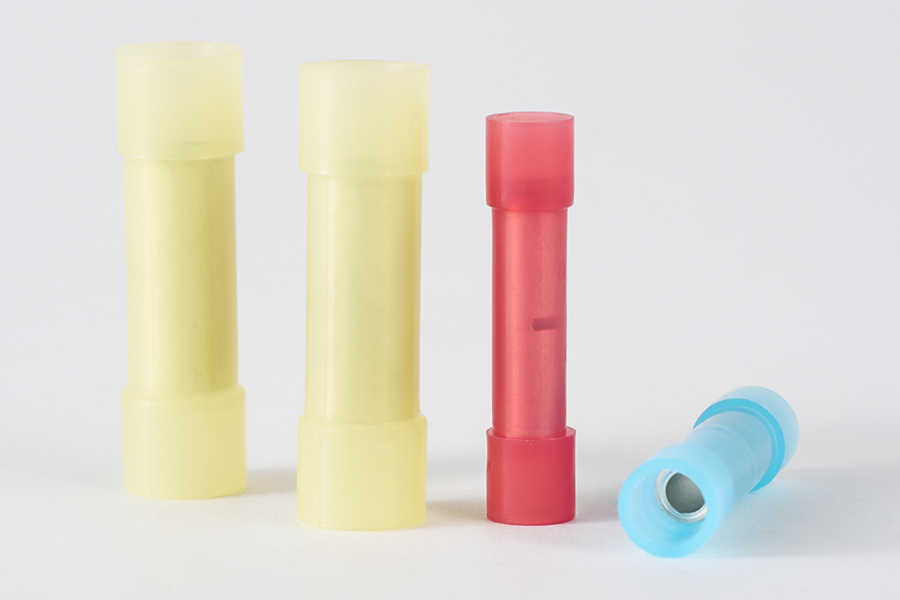
Key Features of a Butt Splice Connector:
Crimped Connection: The wires are inserted into each end of the connector and crimped (compressed) using a crimping tool for a secure connection.
Insulated Sleeve: Most butt splices have a plastic or heat-shrink insulation to prevent short circuits and corrosion.
Different Sizes: Available in various gauges to match wire thicknesses (e.g., 18-22 AWG, 16-14 AWG, etc.).
Material: Typically made of copper or tin-plated copper for good conductivity.
Types of Butt Splice Connectors:
Standard Butt Splice – Basic insulated crimp connector.
Heat-Shrink Butt Splice – Shrinks when heated to create a waterproof, sealed connection.
Waterproof Butt Splice – Filled with adhesive to prevent moisture ingress.
Non-Insulated Butt Splice – Requires additional insulation (like electrical tape).
How to Use a Butt Splice Connector:
Strip the Wires – Remove about ½ inch of insulation from both wire ends.
Insert Wires – Place each stripped end into opposite sides of the butt splice.
Crimp the Connector – Use a crimping tool to compress the metal sleeve.
(Optional) Heat the Connector – If using a heat-shrink type, apply heat to seal it.
Common Applications:
Extending or repairing damaged wires.
Automotive wiring harness repairs.
Marine and outdoor electrical connections.
How Do You Use Butt Splice Connectors?
Using butt splice connectors is relatively simple and can be done by following a few basic steps. First, strip the insulation off the ends of the wires that you want to connect, exposing the bare conductor. The amount of insulation to be stripped depends on the length of the connector and the gauge of the wire.
Once the wires are stripped, insert the ends into the two open ports on the connector. Next, using a crimping tool, apply pressure to the barrel of the connector. The crimping tool will press the metal barrel tightly around the wires, ensuring that a solid, conductive connection is made. The crimping process also helps to secure the wire inside the connector, preventing it from slipping out over time.
For added protection, butt splice connectors can be insulated with vinyl or nylon covers, which protect against accidental shorts and prevent corrosion from moisture. After the crimping process, the connector is ready for use and can be installed in your electrical system.
What Are the Advantages of Butt Splice Connectors?
Butt splice connectors offer several advantages, which is why they are commonly used in a variety of electrical applications. Unlike other types of connectors that may require additional tools or soldering, butt splice connectors only require a crimping tool, which makes them more accessible for both professionals and hobbyists. When properly crimped, butt splice connectors form a tight and reliable bond between the wires, ensuring that there is minimal resistance or signal loss. This is crucial in applications where uninterrupted current flow is essential, such as in automotive wiring or industrial control systems. They come in various sizes and types, including insulated and non-insulated versions, to accommodate different wire gauges and environmental conditions. Insulated versions are particularly useful in situations where additional protection is needed, such as in damp or outdoor environments.
Are High Temp Butt Connectors Safe?
High temperature butt connectors are specially designed to withstand heat conditions while maintaining a reliable electrical connection. These connectors are commonly used in applications where the wiring is exposed to high temperatures, such as in automotive engines, industrial machinery, and electrical systems that are subject to high heat environments. However, questions often arise about the safety of using these connectors, particularly in terms of their ability to handle heat, prevent accidents, and ensure long-term performance.
What Are High Temp Butt Connectors?
High-temperature butt connectors are similar to standard butt splice connectors, but they are designed to handle much higher temperature ranges. They are typically made from heat-resistant materials, such as silicone rubber or nylon, which can withstand heat without degrading or melting. The connectors often feature heat-resistant insulation that is more durable than typical vinyl or nylon insulation, making them ideal for high-heat environments.
The internal metal barrel of high-temperature butt connectors is usually made from copper, which is known for its conductivity and heat resistance. To further enhance their heat resistance, the connectors are often coated with tinned copper or nickel plating, which prevents corrosion and ensures the connectors maintain good electrical conductivity even at high temperatures.
Are High Temp Butt Connectors Safe to Use?
High-temperature butt connectors are safe to use when applied in appropriate applications and properly installed. Their design ensures that they can handle heat without compromising the safety or integrity of the electrical system. High-temperature connectors are rigorously tested to meet specific standards, such as UL (Underwriters Laboratories) certifications, which indicate that they have passed tests for safety, performance, and heat resistance.
Standard connectors made from materials like PVC or vinyl can degrade and lose their insulating properties when exposed to temperatures above their rated limits. High-temperature butt connectors, however, are constructed from materials that are specifically designed to withstand such conditions. They are often rated for use in environments with temperatures as high as +125°C to +150°C (257°F to 302°F), which ensures they remain functional and safe even in conditions.
High-temp butt connectors typically feature strong, durable insulation that prevents short circuits, reduces the risk of electrical arcing, and ensures the wire connections are stable and secure. As long as the correct high-temperature connector is chosen for the wire gauge and application, the risk of overheating, electrical fires, or failures is significantly minimized.
How Do You Ensure the Safety of High Temp Butt Connectors?
While high-temperature butt connectors are generally safe to use, their safety depends largely on proper installation and application. Ensure that the connector is rated for the temperature range of your specific environment. If a connector is used in a high-heat situation beyond its rated capabilities, it could fail and electrical hazards.
It is crucial to use the right crimping tool for the connector. A poorly crimped connection can cause electrical resistance, which generates heat, potentially connector failure. Using a calibrated crimping tool ensures a secure and reliable electrical bond, preventing overheating or damage to the connector.
Another critical step is to ensure the wires are properly stripped before insertion into the connector. Exposing too much or too little of the wire can poor contact or increase the risk of short circuits. Similarly, the wires should be inserted fully into the connector to ensure that the crimping tool properly compresses the connector and makes a solid connection.
It is essential to monitor the condition of the connector over time, especially in high-heat applications. If a connector shows signs of degradation, such as melted insulation or a loose connection, it should be replaced immediately to avoid potential safety risks.
What Are the Benefits of High Temp Butt Connectors?
The primary benefit of using high-temperature butt connectors is their reliability in heat environments. By choosing the right connector, you can ensure a strong, stable electrical connection even when exposed to high temperatures. These connectors help prevent wire fatigue, overheating, and connector failure, all of which could otherwise equipment malfunction, short circuits, or fires.
High-temp butt connectors are particularly useful in automotive, aerospace, industrial, and marine applications, where wiring systems are routinely exposed to high temperatures. They are designed to operate safely and efficiently in demanding conditions, allowing for longer-lasting electrical systems and reducing the need for frequent repairs or replacements.
Are There Any Risks?
The main risk with high-temperature butt connectors is if they are used in an environment beyond their rated temperature range. If the connector’s material or insulation is exposed to temperatures that exceed its limits, the insulation could melt or degrade, resulting in a loss of protection against electrical shorts or fires. Therefore, it’s crucial to always verify the temperature rating and choose the correct connector for the specific application.
