


 English
 Español
 Deutsch


Aluminium conductors carry power over long distances at a lower weight than copper, and that advantage reaches the installation site as a practical question: how does the cable end attach to the equipment? Aluminium Crimping Lugs answer it, yet the metal behaves differently from copper once the crimp is made. Yueqing Chaodao Electrical Connection Co., Ltd. in Yueqing City, Zhejiang, produces cable lugs and connection accessories, and the way an aluminium lug handles surface chemistry and crimp pressure sets it apart from the copper and brass lugs in the same factory.
The Oxide Layer Forms Within Seconds
Bare aluminium reacts with air almost immediately and builds a thin, hard oxide layer across the surface. The layer protects the metal underneath, but it also resists electrical current, so a connection made across it conducts poorly. A copper lug is less demanding because copper oxide is softer and breaks up under pressure. For Aluminium Crimping Lugs, the crimp has to rupture the oxide layer inside the barrel and press clean metal against the conductor strands. That requirement shapes the barrel design, the die profile, and the instructions that go with each lug.
How the Barrel Handles the Oxide
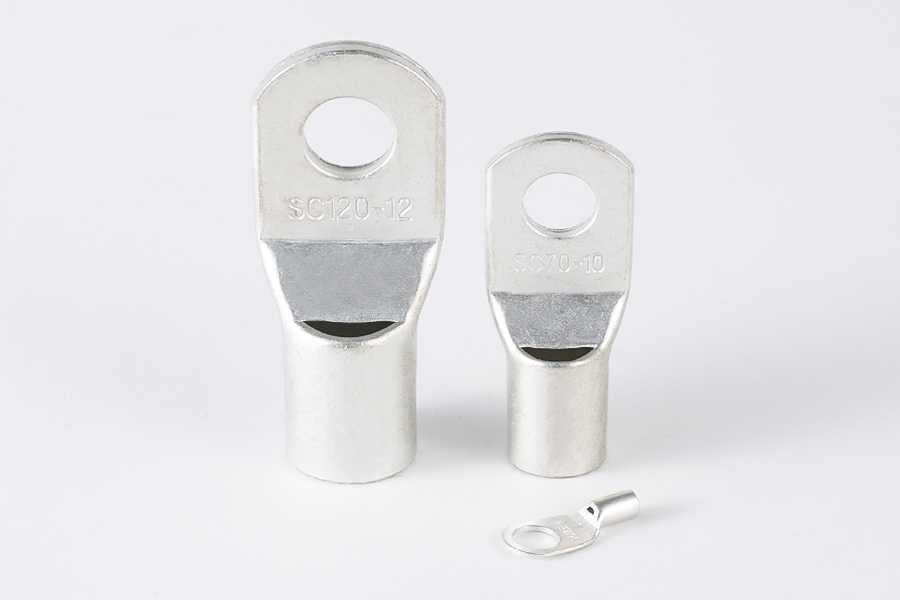
The barrel interior is where the connection is made. Some lugs carry a ribbed or serrated inner surface that scrapes the strands as the crimp closes. Others come with an inhibitor compound inside the barrel, which keeps air away from the freshly exposed metal and slows a new oxide layer from forming. Both approaches serve the same goal, a gas-tight contact between lug and conductor. A factory that produces Aluminium Crimping Lugs has to control the inner surface of the barrel as carefully as the outside dimensions, because the inside is where the electrical joint actually forms.
Crimp Depth and the Creep Problem
Aluminium is softer than copper and flows slowly under sustained pressure, a behavior called creep. A crimp that is too shallow leaves gaps between strands and the barrel wall. A crimp that is too deep thins the barrel and cuts into the strands. Over months, a loose crimp warms up under load, expands, cools, and loosens further. Dies for Aluminium Crimping Lugs are therefore matched to the barrel wall thickness and the conductor section, so the compression reaches the depth the lug was designed for.
Aluminium and Copper Compared
|
Property |
Aluminium Lug |
Copper Lug |
|
Weight |
Lighter |
Heavier |
|
Surface oxide |
Hard, resists current |
Softer, breaks up under pressure |
|
Behavior under pressure |
Softer, can creep over time |
Holds crimp shape more steadily |
|
Joint preparation |
Needs oxide control at the barrel |
Needs less surface treatment |
|
Typical conductor |
Aluminium cable |
Copper cable |
The table shows why Aluminium Crimping Lugs and copper lugs call for different designs. A copper lug tolerates a wider range of installation habits. An aluminium lug rewards a controlled crimp and a clean preparation of the conductor ends.
Matching the Lug to the Cable Material
A lug and conductor of the same metal avoid the galvanic reaction that develops when aluminium and copper touch in damp conditions. Where a cable must connect to a copper busbar or terminal, the lug has to manage that contact, whether through a plated surface or a bimetallic design. Yueqing Chaodao Electrical Connection Co., Ltd. makes copper lugs, including the Single Hole Copper Lug and the Non-Insulated Copper Lug, as well as a Ring Brass Cable Lug, so a distributor can supply both cable materials and the matching terminals from one source. Offering Aluminium Crimping Lugs beside the copper line simplifies the choice for an installer who handles mixed cable types on one project.
Tools and Terminals Alongside the Lug
A lug is only as dependable as the crimp tool that closes it. The factory's range includes terminal tools, terminal kits, and wiring accessories, which allows a buyer to order Aluminium Crimping Lugs together with the compression tool intended for them. Crimp quality depends on consistent tool settings, and a matched tool removes guesswork on the job. The same range includes butt splice connectors, closed end connectors, blade and ring terminals, and quick disconnectors, covering the other connections an electrician makes on the same panel.
Where Aluminium Lugs Fit in Distribution Work
Aluminium cable is common in power distribution because of its weight and cost relative to copper. Aluminium Crimping Lugs finish those cable ends. Electricians working with Aluminium Crimping Lugs on this kind of work look for a barrel that accepts the conductor easily, a crimp zone marked clearly, and a palm that sits flat against the terminal. A supplier able to provide those details across the range gives contractors a dependable way to finish aluminium cable ends.
