


 English
 Español
 Deutsch


Splicing two wires together looks like a single task, but the insulation covering that splice has to be chosen based on where the connection ends up and what it needs to withstand once installed. An Electrical Crimp Connector used to join wire ends comes in several insulation configurations, and picking among them involves more than matching wire gauge to the connector barrel.
Non-Insulated Connectors Leave the Choice to the Installer
A non-insulated Electrical Crimp Connector ships as a bare metal barrel, requiring the installer to add heat-shrink tubing, electrical tape, or another covering separately after crimping. This approach to an Electrical Crimp Connector suits installations where a specific insulation type is already standardized across a project, or where the connector will sit inside an enclosure that provides its own protection against contact and moisture. Buyers stocking non-insulated connectors typically pair them with a separate insulation supply rather than treating the bare connector as a finished, ready-to-install product on its own.
Insulated Connectors Build Protection Into the Component
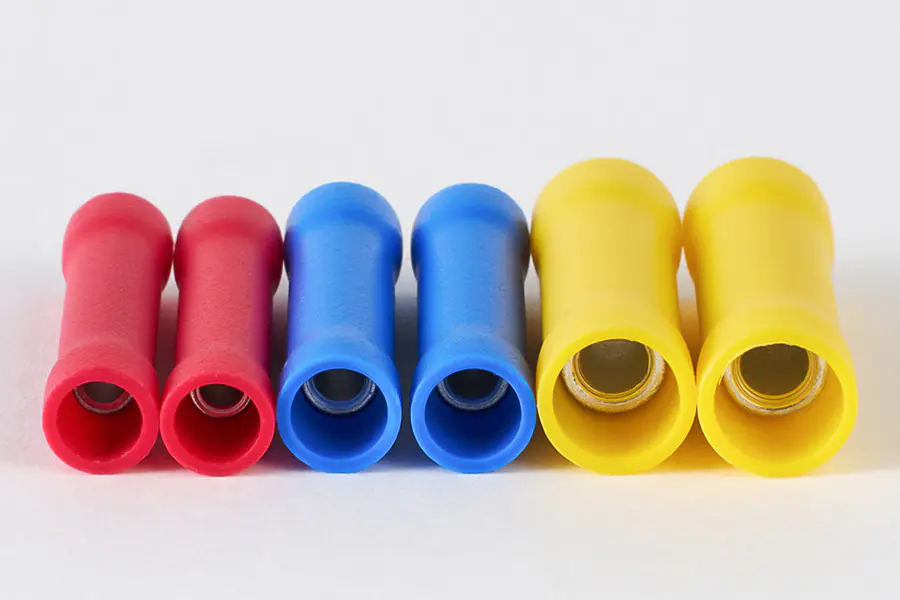
A pre-insulated Electrical Crimp Connector arrives with a plastic sleeve already molded around the crimp barrel, saving an installation step compared to the non-insulated version while providing consistent coverage across every unit in a batch. This consistency matters for buyers running larger installation crews, since relying on individual installers to apply separate insulation correctly introduces more variation into an Electrical Crimp Connector program than a connector that arrives with insulation already in place. The tradeoff is less flexibility, since the insulation type and coverage are fixed at the point of manufacture rather than selected on-site for a specific application.
Heat Shrink Versions Add Environmental Sealing
A heat shrink butt connector uses a tubing sleeve that contracts tightly around the crimped joint when heat is applied, creating a seal that resists moisture intrusion better than a standard insulated sleeve that simply covers the connection without conforming closely to the wire jacket. This sealing quality suits outdoor installations, marine applications, or environments where water exposure is a realistic concern rather than an unlikely edge case. Buyers should confirm that a heat source appropriate for the connector's shrink temperature is available during installation, since incomplete shrinking leaves gaps in the seal that undermine the entire purpose of choosing this configuration.
Nylon Sleeve Construction Prioritizes Mechanical Toughness
A nylon sleeve connector trades some of the flexibility of vinyl or standard plastic insulation for greater resistance to abrasion, cutting, and mechanical stress during installation and ongoing use. This construction suits industrial settings where connectors might be pulled through conduit, dragged across rough surfaces, or otherwise subjected to physical wear that a softer insulation material would show damage from more quickly. The added toughness generally comes with a firmer, less pliable feel compared to standard insulated connectors, which some installers find less comfortable to work with in tight spaces.
Matching Insulation Type to the Installation Environment
Choosing among these Electrical Crimp Connector configurations comes down to weighing installation speed, environmental exposure, and mechanical stress against each other for a given project. A non-insulated splice connector paired with the installer's own tubing offers maximum flexibility for projects with varied insulation requirements across different sections of the same job, while a heat shrink or nylon sleeve version suits projects where one insulation type covers the full scope of work consistently. Buyers managing mixed-application inventory often stock more than one configuration rather than standardizing on a single insulation type across every project.
Where Insulation Options Fit Within Broader Connector Production
Yueqing Chaodao Electrical Connection Co., Ltd. produces butt splice connectors across insulated, non-insulated, heat shrink, and nylon sleeve configurations, giving distributors a way to match connector insulation to the specific installation demands a customer's project presents. Stocking across this range allows a single supplier relationship to cover projects ranging from indoor control panel wiring to outdoor or marine installations where moisture sealing becomes the primary selection criterion rather than an optional add-on.
