


 English
 Español
 Deutsch


Electricians handling branch circuit splicing and fixture wiring increasingly compare crimp configurations and insulation ratings before selecting a closed end electrical connector for a given splice application, since a single connector line rarely covers every wire combination a residential or commercial job requires. Understanding the differences between available configurations helps contractors avoid the mismatched connector selection that leads to callback issues after initial installation.
Barrel Configuration And Wire Count Capacity
Barrel internal geometry determines how many conductors a closed end electrical connector can accommodate reliably within a single crimp, and manufacturers producing connectors across multiple size tiers calibrate internal volume to match specific combinations of wire gauge and conductor count rather than offering a single universal size covering every splice scenario. A connector undersized for its actual wire load compresses conductors excessively during crimping, potentially damaging strand integrity, while an oversized connector leaves excess internal volume that reduces crimp density and compromises the connection's mechanical and electrical reliability.
Wire count capacity printed on connector packaging reflects testing performed against specific gauge combinations, and installers combining wire gauges within a single splice — a common scenario when tapping a smaller branch circuit off a larger feeder conductor — need to confirm the specific mixed-gauge combination falls within the connector's tested and rated capacity rather than assuming a stated maximum wire count applies uniformly across every gauge combination reaching that total count.
Insulation Material And Voltage Rating
Insulation covering a closed end electrical connector needs to match the voltage rating and environmental conditions of its installation location, since a connector rated for standard dry indoor use may not provide adequate protection in damp locations or outdoor applications exposed to moisture and temperature extremes. Manufacturers producing weather-resistant connector variants use insulation compounds formulated specifically for moisture resistance and extended temperature range, distinct from the standard insulation compound used on connectors intended purely for dry indoor residential wiring applications.
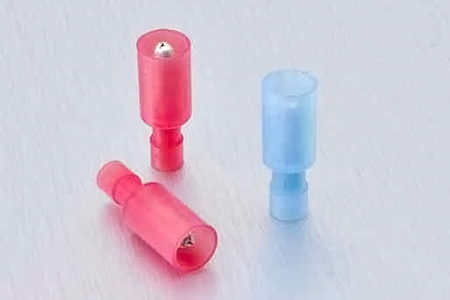
Voltage rating verification matters particularly for commercial and industrial applications running higher voltage circuits than typical residential branch circuits, since a connector rated only for standard low-voltage residential use could fail under the higher voltage stress present in commercial electrical distribution systems, creating both a safety hazard and a code compliance violation if installed in an application exceeding its rated capacity.
Crimping Tool Compatibility And Installation Consistency
Crimping tool die profile needs to match the specific closed end electrical connector model being installed, since a die calibrated for one connector's barrel geometry can produce an inadequate crimp when applied to a differently shaped connector from another manufacturer even at the same nominal wire gauge rating. Suppliers increasingly pair each connector product line with a specific recommended tool and die combination, reducing the installation inconsistency that occurs when contractors apply a general-purpose crimping tool across connector types it was not specifically calibrated to handle.
Field inspection of completed crimps increasingly includes a visual crimp indicator built into some connector designs, letting installers and inspectors confirm proper crimp completion without needing to disassemble or pull-test every completed connection during a routine job walkthrough.
Application-Specific Selection For Fixture And Junction Box Wiring
Lighting fixture wiring and junction box splicing represent two of the common applications for a closed end electrical connector, though the wire gauge and count requirements differ considerably between these use cases. Fixture wiring typically involves lighter-gauge conductors in smaller quantities, while junction box splicing in a commercial setting might combine larger conductor gauges across a higher wire count within a single splice point, requiring contractors to stock multiple connector sizes rather than assuming a single size adequately serves every splicing scenario encountered across a typical job.
Bulk Sourcing Considerations For Electrical Contractors
Contractors stocking a closed end electrical connector inventory across multiple job types increasingly organize supply by application category rather than purely by wire gauge, recognizing that voltage rating, environmental exposure, and wire count requirements combine to determine appropriate connector selection more reliably than gauge specification considered in isolation from these other application-specific factors.
Truck stock organization reflects this shift in practical terms, with crews carrying labeled bins separating standard indoor connectors from weather-resistant variants and organizing further by wire count capacity rather than treating connector selection as an afterthought handled at the point of installation. Suppliers responding to contractor feedback increasingly package connectors with clearer application guidance printed directly on the bulk packaging, reducing the selection errors that occur when a busy crew grabs an available connector without confirming it matches the specific voltage rating and wire count the splice application actually requires.
